The seven years I lived in South East Asia transformed my thinking about design and continue to inform how I approach my work. While these changes are mostly subconscious, absorbed gradually into the way I do things, occasionally they reveal themselves. Recently, while writing my first year doctoral report, I have had such a moment. Things that began as seemingly disparate projects have started to come together. My PhD, which seeks to inform ways of designing which prioritise the feelings and experiences of participating, has begun to draw on another project I began while living in Indonesia which explores the politics of myth.
Initially drawn together by a shared interest in experimental ethnographic approaches to creative practice, Karina Roosvita (or Vita as I know her) and I began to use traditional myth as a way to talk to people about difficult local and social issues. Back then our work together focussed on the myth of Kanjeng Ratu Kidul, a mythical sea queen who lives along the Southern Coast of Java. Over centuries Ratu Kidul has been a leprotic princess, a protector of livelihoods, the sultans lover, and an object of sexual fetish. She is a powerful figure and her story has been retold countless times to harness that power to meet particular political agendas. Most recently to justify the rapid redevelopments occurring along the Southern Coast of Yogyakarta, including a huge growth of tourism, a new international airport, and an expansion of the sand mining industry.
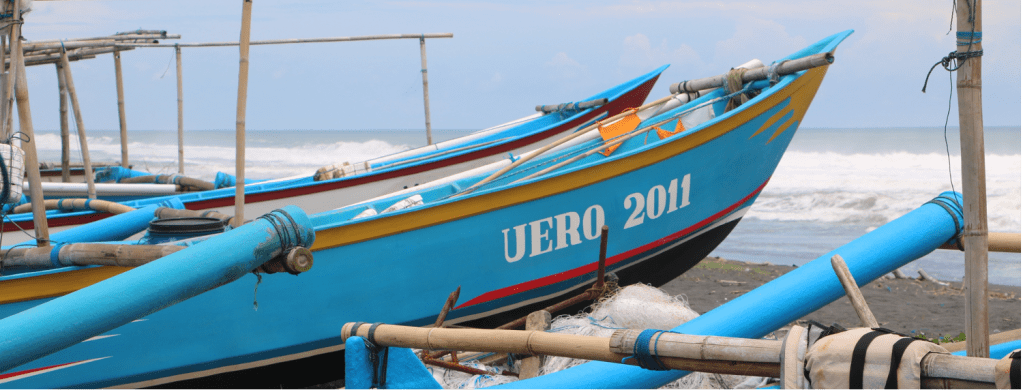
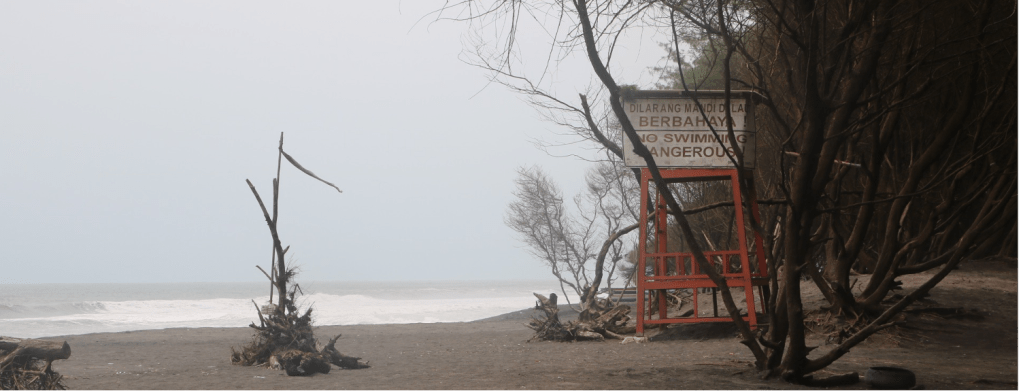
At that time we were keen to understand how people along the coast were responding to these changes but were also acutely aware of the challenging politics of the topics we wanted to talk about. We decided to see whether traditional mythology like that of Kanjeng Ratu Kidul might help. We had two questions: was traditional myth still relevant to communities, and could we use it to talk about difficult political issues? We travelled along the southern coast, from Pantai Congot to Pantai Parangtritis, inviting people to retell her story and how they think she is relevant today. Did the queen still provide guidance to the community, and to what extend did she provide it in the face of significant social and economic change?
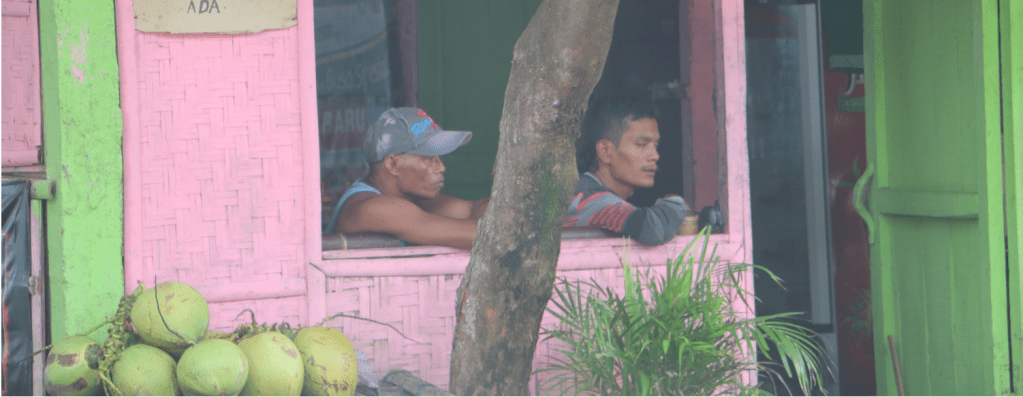
We found that, yes, Kanjeng Ratu Kidul was indeed still alive and well. She still decided the fate of fisherman against the incredibly rough seas of the southern Javanese coast. She still decided the fate of coastal businesses, whether it be in terms of the size of a fisherman’s catch or the success of a beachside warung (cafe/restaurant). She still represented the dangers of coastal life – rip tides and poisonous fish. And, she was still a reminder of how to behave along the coast – no swearing or dumping of litter. For the people, the key to a happy life along the coast was to keep Kanjung Ratu Kidul happy by asking her permission for new ventures, providing appropriate offerings, and behaving nicely.
We found that even the big ventures that were planned for the coast had followed these rules. The sultan had asked Kanjeng Ratu Kidul’s permission to build the airport, offerings had been given, and all requests had been granted. This is relatively unsurprising as Ratu Kidul has a long standing relationship with the Kraton of Yogyakarta. While her own mythology pre-dates the sultanate, her importance to the region was reinforced in 1587, upon its founding. The story goes, that when seeing the first sultan praying on the coast of Yogyakarta, Ratu Kidul fell in love with him and committed herself to his future patriarchal line. In doing so she secured both the prosperity of the region and the status of the first family.
The strong association between Kanjeng Ratu Kidul and the Kraton was clear in the stories we heard from the coast. Along with the usual tales of the hotel room reserved for her and the sultan’s rendezvous, people even associated the 2004 tsunami with the attendance of Kanjung Ratu Kidul at the wedding of the sultan’s daughter. It was the Kraton that dictated the type and scale of the offering that people made to the queen to keep her happy, to keep the region prosperous, and ultimately to keep the Kraton in power. It became clear that we were not the first to politicise Kanjung Ratu Kidul, and that maintaining her relevance along the coast had been an essential part of maintaining the relevance and power of the Kraton for generations.
For us, this revelation shifted our understand of the myth of Kanjung Ratu Kidul from simply being a way to talk about political things, toward being itself a political thing – or a tool with which to do politics. The more we looked into it, the more we saw how Ratu Kidul had been turned, flipped and twisted to meet the agendas of the powerful – whether it be in the cult films of the 1980s which represented her through the machismo lens of the New Order regime, or in her reclassification as an islamic genie in order to meet more conservative readings of the faith, or the coastal pimps who condone the consummation of a ritual offering with prostitution. Ratu Kidul is herself a political thing, not just a way to talk about the political.
While we began the project considering whether myth might empower communities to confront the social and economic changes occurring along the coast, what we found is that myth is already an active player in that change working on the side of the developers. This is not a new phenomenon, but a successful strategy employed by the powerful for generations. By skilfully twisting myth toward their own contemporary agenda they maintain their social and economic position. How then to twist the myth in support of the people? Some of the stories we heard on the coast give us hope. Women, especially, put forward ideas of the queen as a feminist icon for the region, or as an important environmental ambassador. By presenting more radical twistings of Kanjeng Ratu Kidul these stories point towards more progressive futures. It is these types of twisted myths that we have become interested in – where myth is made relevant to the causes of equality and social justice, rather than maintaining the agendas of the powerful.
It is this twisting of myths that suddenly feels relevant as I explore the role which design plays in re-articulating feelings of participation – or perhaps re-articulating the meanings we draw from the world around us which makes us feel that we are participating. The interpretation of designed things, of what they lead us to believe, and how we can twist them to mean something else – to participate in new things, new ways of being, new relationships and interdependencies. The question for me, and one that is now central to my PhD, is how can design practice support such twisting?
Vita and I continue to work together to explore the ways that myths are flipped, turned and twisted to meet particular political agendas. We have begun to wonder about the politicisation of other myths and how such political manipulation is experienced by those for whom the myth is important. To explore these ideas further, we invited 5 artists: Desy Gitary (Indonesia), Putri Siswanto (Indonesia), Zarina Muhammad (Singapore), Mumtaz Khan Chopan (Afghanistan), Acong and Hilman (Indonesia), to join us for a 6-month creative exchange called Twisted Myth. Each artists is working on a myth of their interest and is developing individual and collaborative works based on their explorations. To find out more about project please visit the Twisted Myth website.

 vicky gerrard