negotiating gender and sexuality in frontline migrant support services
Introduction
This project welcomes participation from staff and volunteers at migration support services, as well as migrants, refugees and people with experience seeking asylum to collaborate with us to develop resources to support service providers and users overcome the challenges they face when negotiating gender and sexuality.
Background
In 2024, Aine Bennett, Lizzie Hobbs, and I worked with Migrant’s Rights Network to run two workshop for frontline migration support services to explore how gender and sexuality are negotiated within their day-to-day work. The sessions aimed to provide an informed space for participants to produce actionable steps towards better accommodating LGBTQ+ people in their services; mainstreaming a more nuanced understanding of gender throughout their services; and managing potential tensions that arise with the other pressures of service provision.
The first session included presentations about how asylum seekers, refugees, and migrants experience gender and sexuality – and how this affects their experiences of the support they receive. Aine Bennett shared her PhD research about the challenges of claiming asylum on the basis of different sexualities or gender identities. Lizzie Hobbs shared her PhD research on the relationship between gatekeeping, carcerality and masculinities in the migrant rights sector. Finally, Julia Tinsley-Kent from Migrants’ Rights Network shared their experience on campaigning around gender, queerness and migration, and supporting the work of a variety of organisations in the sector. Participants were then invited to engage in a peer-to-peer discussion about how gender and sexuality is negotiated in their own organisations before developing workable strategies to make changes where needed. I guided the discussion by drawing on my PhD research about how service design shapes care relations.
During a follow-up event we invited participants to collaborate with us to develop a resource to support service providers and users overcome some of their own challenges. We welcomed participation from staff and volunteers at migration support services, as well as migrants, refugees and people with experience seeking asylum. The workshop was guided by a series of questions to build off participant reflections from the previous workshop and collectively develop a useful resource for service providers. Of particular interest to participants was to have a resource which could help them initiate a conversation about gender and sexuality in their own organisations.
Output
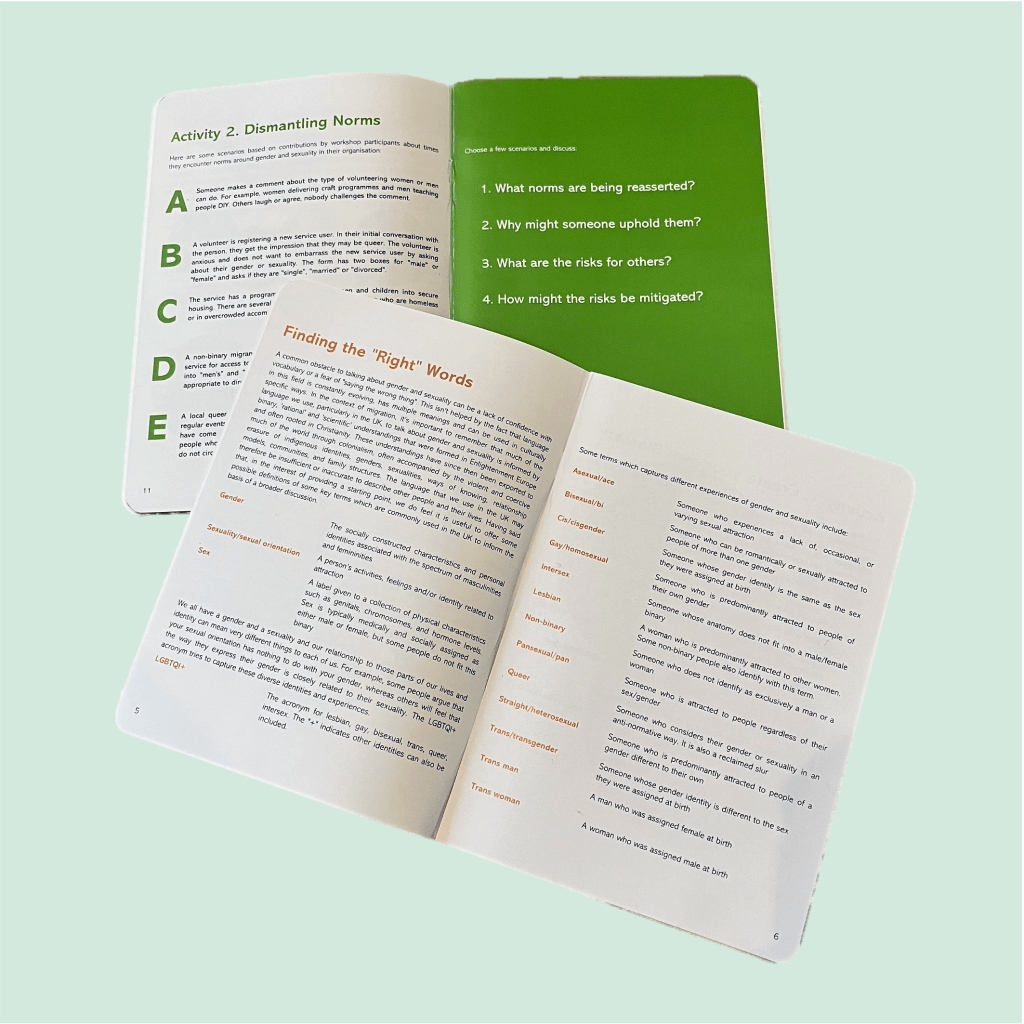
A workbook was produced which offers an actionable summary of the discussions over the two workshops. This includes an overview of the challenges faced by service providers when negotiating gender and sexuality, as well as some direct quotes from participants. It also offers some activities to aid a guided discussion among colleagues to explore how the issues are experienced in particular work settings and how any challenges might be overcome. We don’t offer solutions as they will be different for different workplaces but we do offer some support to begin a potentially difficult conversation and develop confidence to build individual and organisational strategies to navigate gender and sexuality in frontline migrant support services. A limited run of booklets will be printed, otherwise the workbook will be hosted on the Migrants’ Rights Network website.
Next Steps
We recognise this workbook is only a first step. We are open to continuing the conversation about what type of support would be useful and hope to establish a network of practitioners and migrants concerned with these issues. This may include resource sharing, peer support, and future events. We are also particularly interested in how we can engage service users in the discussion. If you are interested to connect with the network please feel free to contact me.
 vicky gerrard